Office Information
Required for Access Tags: Valid driver's license, proof of insurance, vehicle registration
Security Services
Public Safety Forms
Guest Clearance Process
1
Request Guest Access
Resident specifies duration (up to 30 days) via phone, email, or in-person
2
First-Time Guest Check-In
Guest presents driver's license for scanning at the front gate
3
Receive Dashboard Pass
Paper pass provided for display on vehicle dashboard for duration of stay
4
Pass Renewal
After 30 days, new scan required (60 days for permanent guest list members)
Stair-Trac Wheelchair Assistance
Call to Schedule: (925) 988-7899
Professional wheelchair assistance service helping residents safely navigate stairs with specialized Stair-Trac equipment.
- Available 7 days a week, 8:00 AM - 4:00 PM
- 20 complimentary trips per manor per calendar year
- Trained, certified operators ensure safe transport
- Easy scheduling via phone reservation
Emergency Preparedness
It is the goal of the Foundation to facilitate resident self-preparation and to utilize available Foundation resources to benefit the community when disaster strikes. The following outlines ways in which the Foundation plans to achieve this goal. The Foundation takes an active role in emergency preparation, and is in a unique position to provide residents with access to vital information, and the skills needed to prepare before disaster strikes.
During an emergency, to the extent possible under the circumstances, the Foundation will:
⚠️ Important Notice
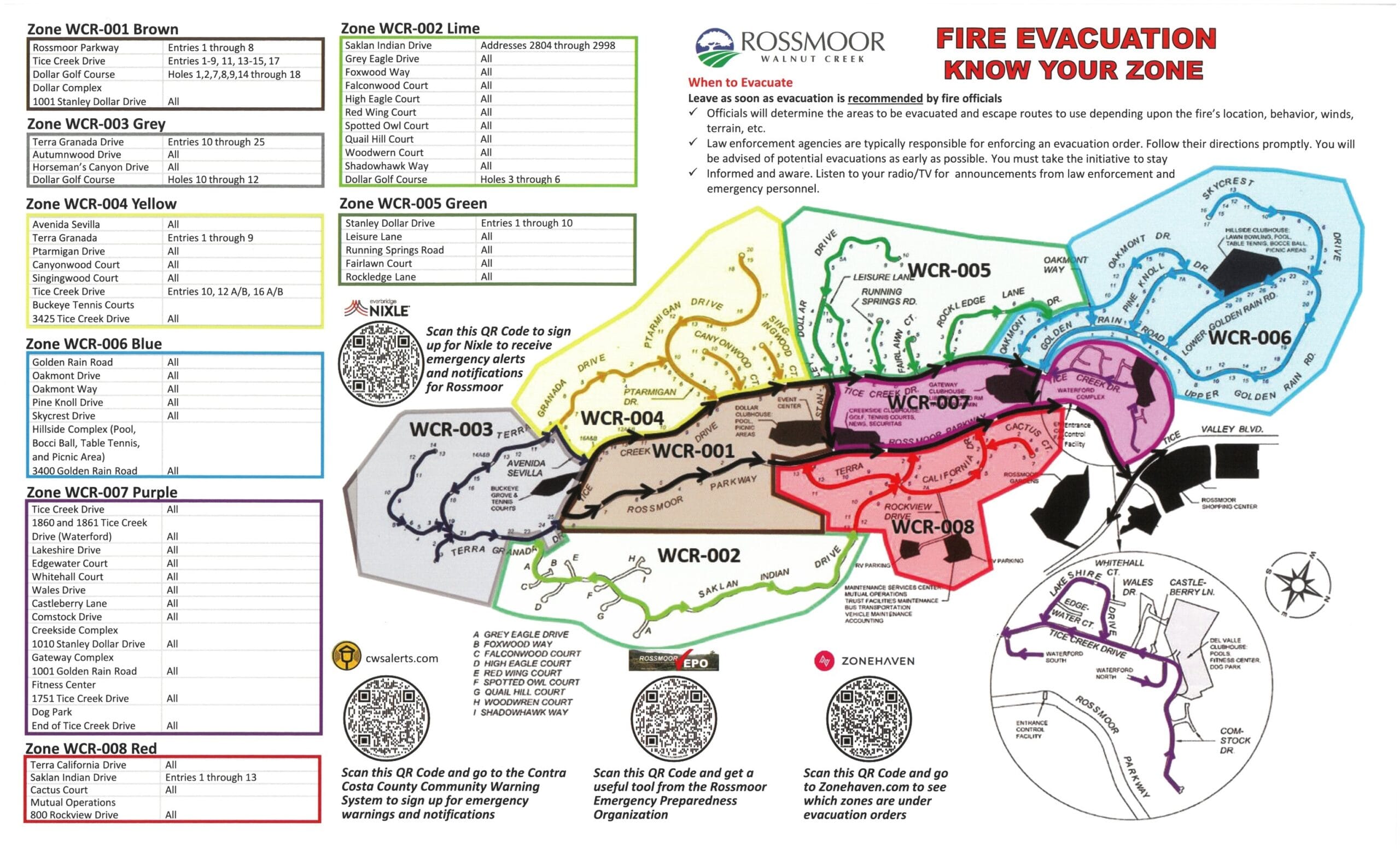
The Foundation's emergency response capability may be limited in the initial days following a disaster. All residents should maintain personal emergency supplies and have individual emergency plans prepared. Use Channel 1083, the Rossmoor News and Nixle as appropriate for public service announcements.
The purpose of the Foundation’s Emergency Operations Plan is to establish a system for coordinating preparedness, response, recovery and mitigation of disasters in Rossmoor. This plan is intended to be an overview of emergency management and not a detailed operational or procedural document. This plan will enhance the Foundation’s ability to prepare for and respond to all hazard events. The plan is not event specific or resident specific.
Firewise (Community Wildfire Safety)
The Rossmoor Firewise program promotes the reduction of wildfire risk while maintaining the community’s quality of life. The program educates residents on living with the prospect of wildfires, encourages measures to reduce wildfire risk while supporting collaborative efforts. Firewise initiatives promote a safer, more comfortable living experience and can help reduce insurance premiums.
Firewise USA website

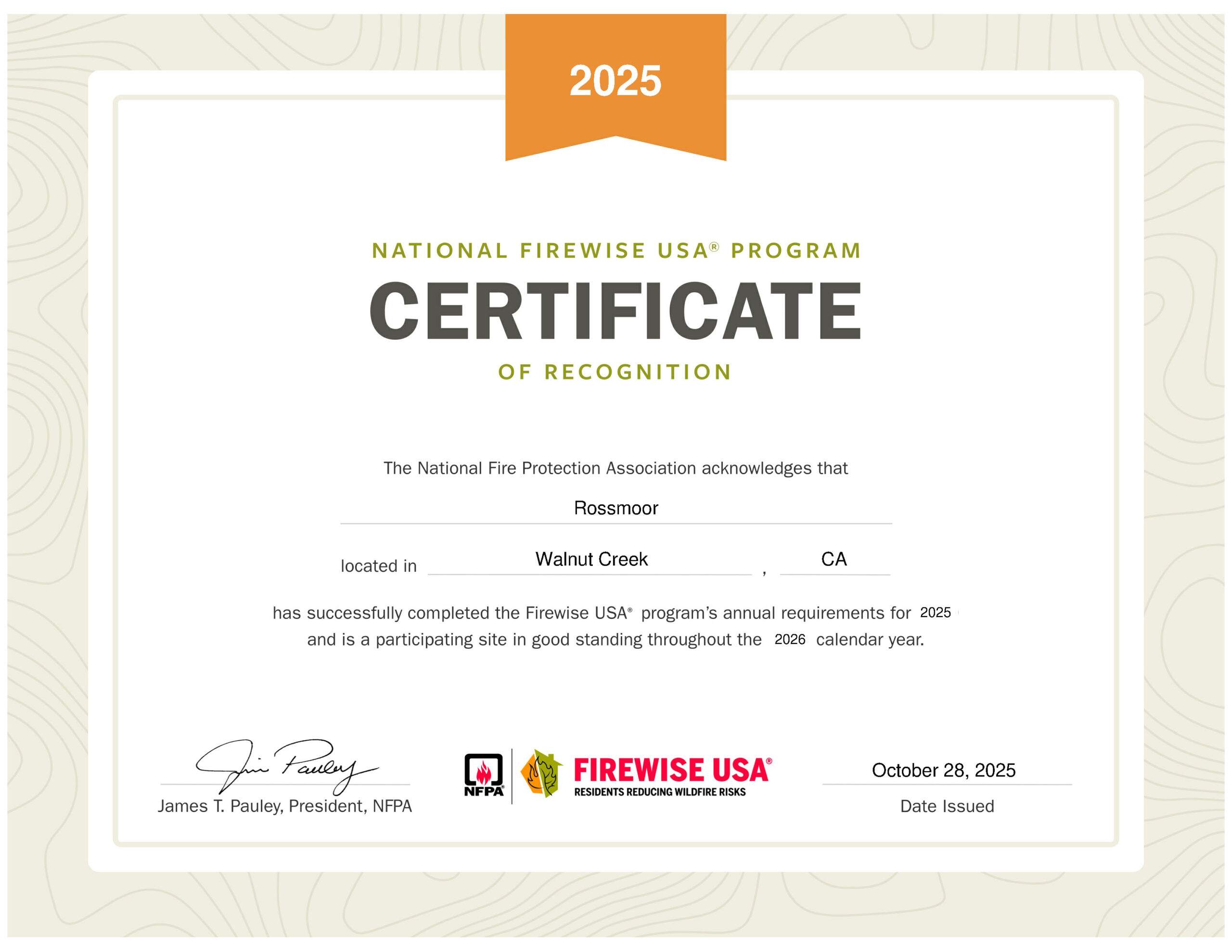
✓ Insurance Discount Available
Some insurance companies offer a discount on property insurance for homes located in a Firewise USA recognized community. Download our certificate for your insurance provider. Click the image below to download.
Implementation of any of the proactive strategies described below fall within the jurisdiction of the individual Mutuals. These can be raised for discussion by each Mutual’s Board of Directors.
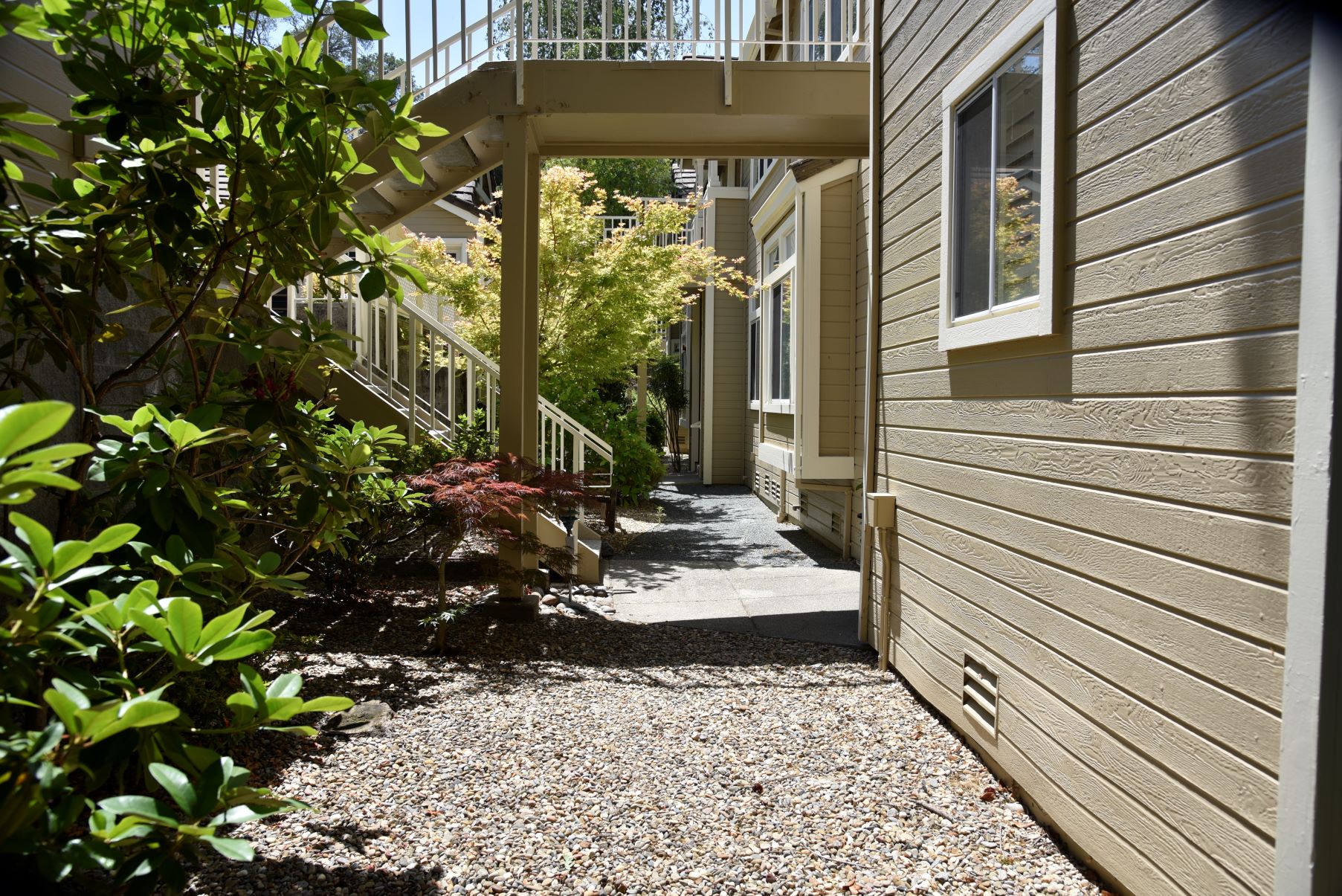
Zone Zero
To protect structures, combustible materials within five feet of a building structure, including decks, wooden fences/gates, and stairs should be removed or replaced. Elimination of vegetation and mulch creates an ember resistant barrier.
Home Hardening & Landscaping
Home Hardening:
Structure protection efforts focus on retrofitting vulnerable areas like roofs, vents, and foundations with fire-resistant materials. Key recommendations include using Class A fire-rated roofing, installing 1/8-inch ember-resistant vent screens, and boxing in eaves to eliminate gaps. Additionally, keeping gutters clear of debris—potentially by installing non-combustible covers—is essential to prevent embers from igniting the roofline.
Landscaping: Community-Wide Fuel Management
Rossmoor utilizes proactive landscaping and fuel management to slow the spread of wildfires. Central to this is the $3.1 million "Shaded Fuel Break" surrounding the community, where thinned woodland reduces fire intensity. Each spring, RWC further protects the area by discing firebreaks into the hills and mowing grasses—specifically under PG&E lines and in high-risk zones. Complementing these efforts, Mutuals ensure all weeds and grasses are cleared within 100 feet of buildings to create a critical safety buffer.
Juniper Removal
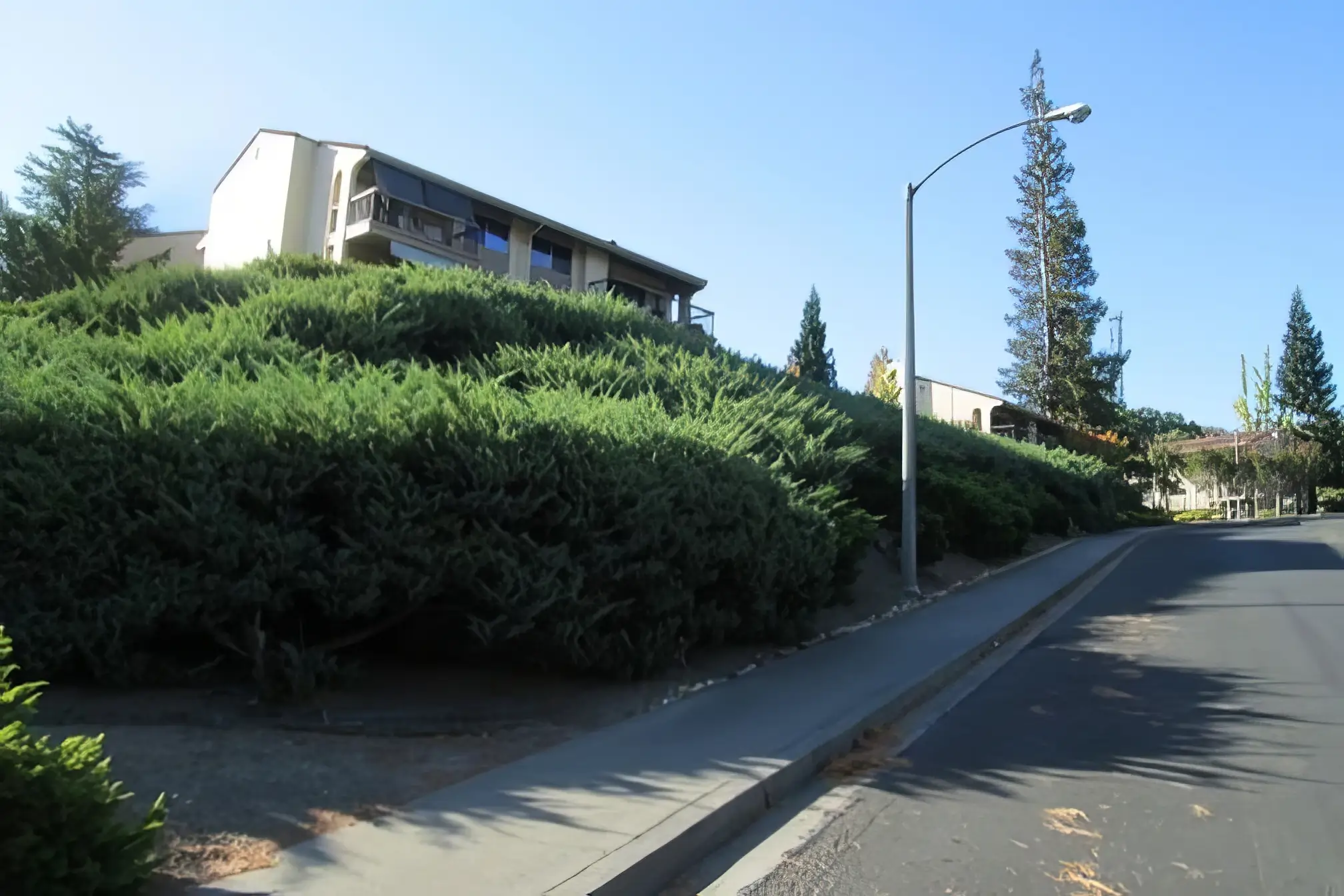
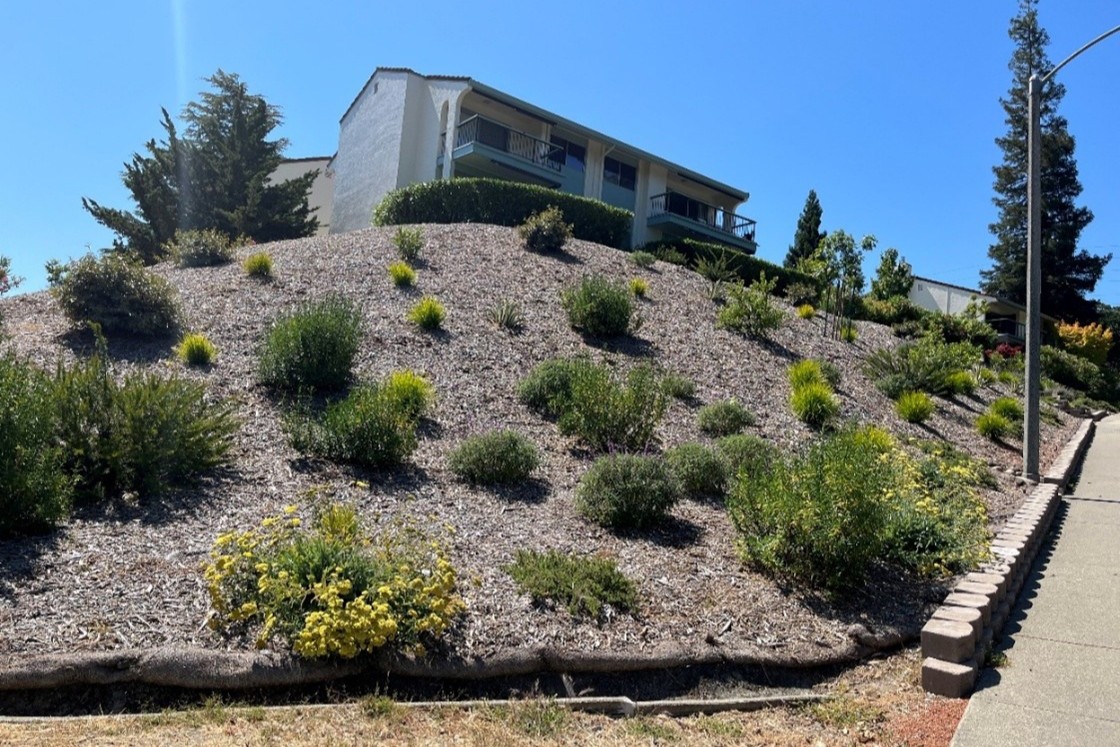
RWC and Mutuals have successfully removed eighty percent of Junipers in Rossmoor. This removal reduces risk by eliminating a high-volatility fuel source. Firefighters refer to these plants as "little green gas cans" because Junipers contain volatile oils and retain dead material, making them highly flammable.
Grazing Goats
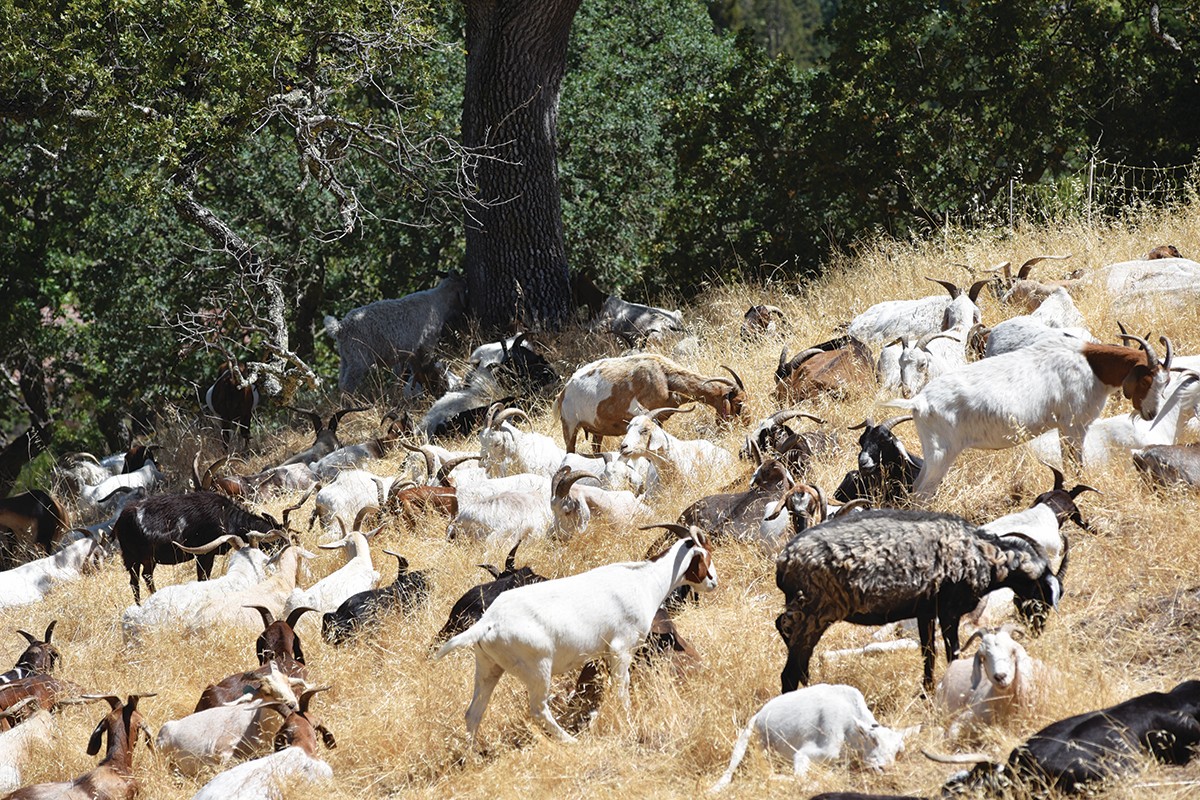
RWC utilizes goat herds to manage hazardous vegetation in areas that are often inaccessible for human crews and machinery. By consuming dry grasses, brush, and low tree limbs, goats prevent ground fires from climbing into the forest canopy. Their grazing also helps maintain fuel break segments that protect our homes.
Hillside Discing
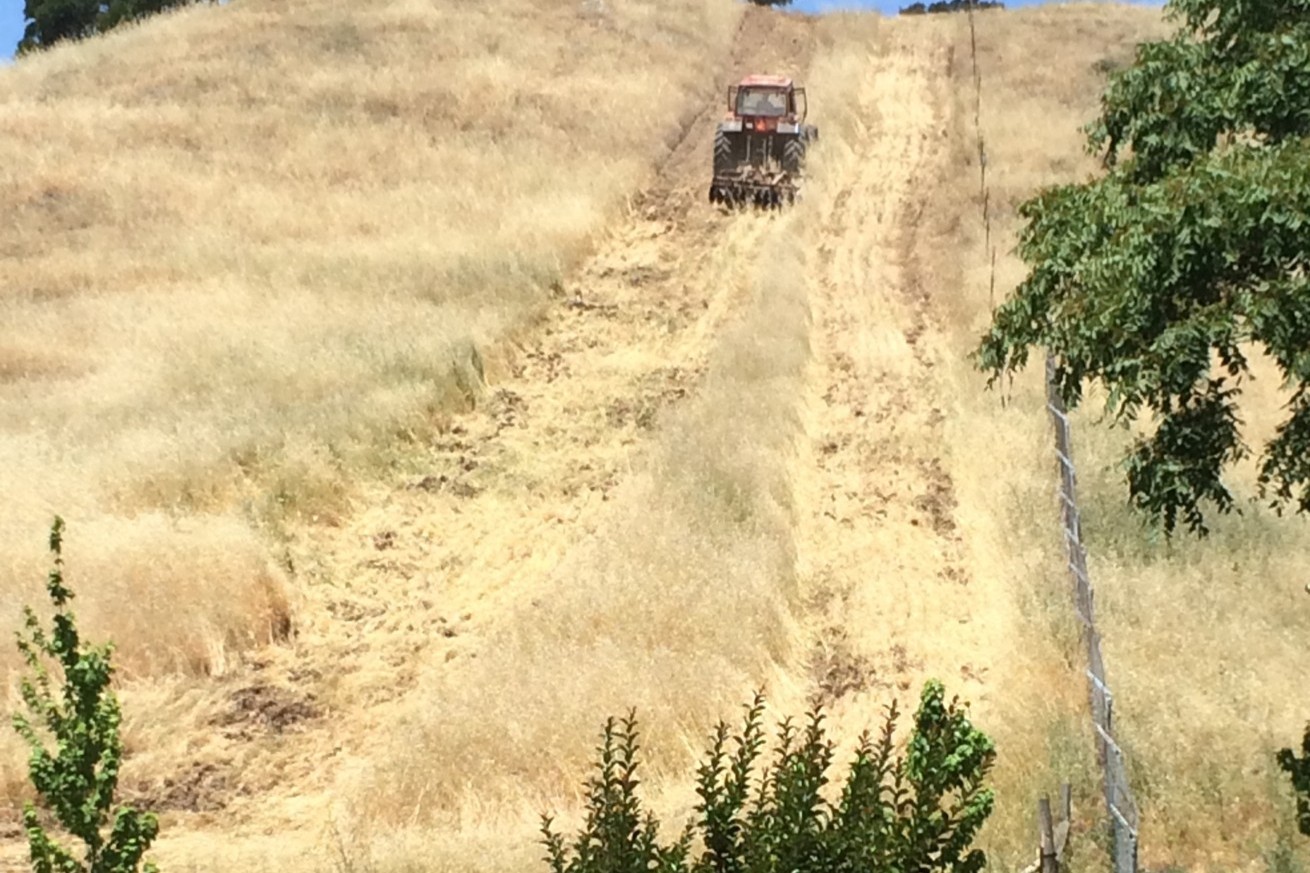
This process involves a tractor pulling a mechanical disc to break up, churn, and mix dry grass residues directly into the soil. As a strategic defense, this creates a clean firebreak that slows the spread of advancing flames. The Contra Costa Fire Protection District annually maintains this network of firebreaks, including the visible tractor lines found on the hillsides surrounding Tice Valley.
Shaded Fuel Breaks
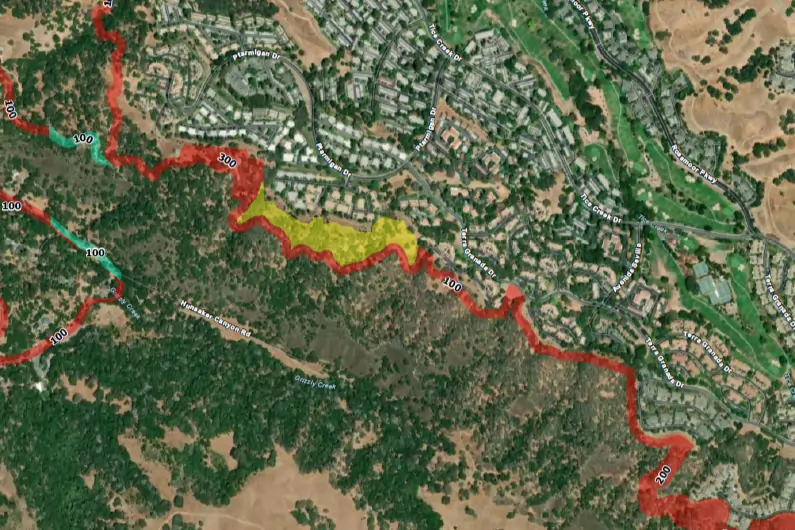
A shaded fuel break nearly encircles Tice Valley, acting as a primary shield for the community. Unlike a total clearing, this break thins out dangerous fuels while leaving larger fire-resistant trees to provide shade and maintain higher ground moisture. The current system includes Red Zone and Yellow Zones where defense is strengthened through thinning, goat grazing, and prescribed fire.
RC Mower
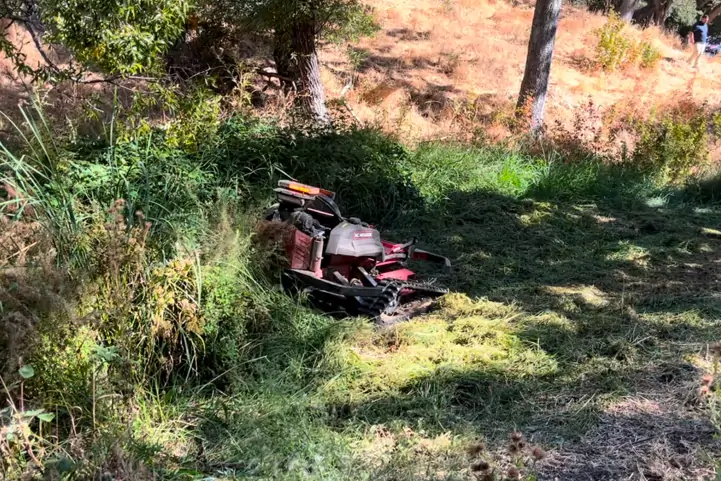
RWC utilizes a specialized gas-powered remote-controlled mower designed for high efficiency and safety. This labor-saving tool is used to cut tall grasses and weeds in sensitive areas like under power lines or within the shaded fuel break. It flattens and masticates vegetation, leaving a layer of mulch that is much less likely to carry a fast-moving fire.
Forest Thinning
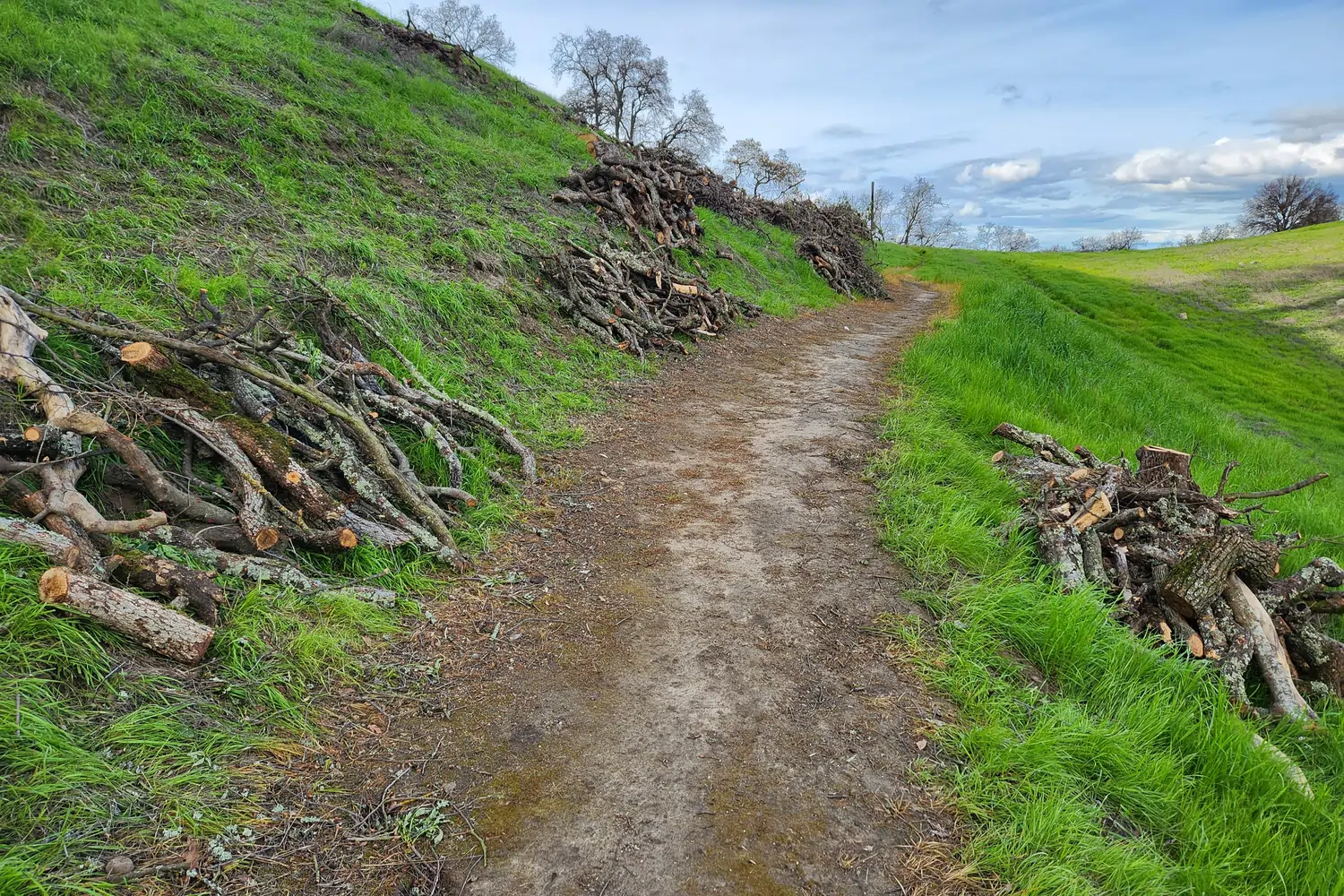
Thinning is the selective removal of specific trees and the pruning of lower limbs on healthy standing timber. This process reduces the fuel load of the forest. Resulting residues are organized into piles for controlled burning or collected by the community for firewood, ensuring that dead wood does not sit on the forest floor.
Prescribed Burning
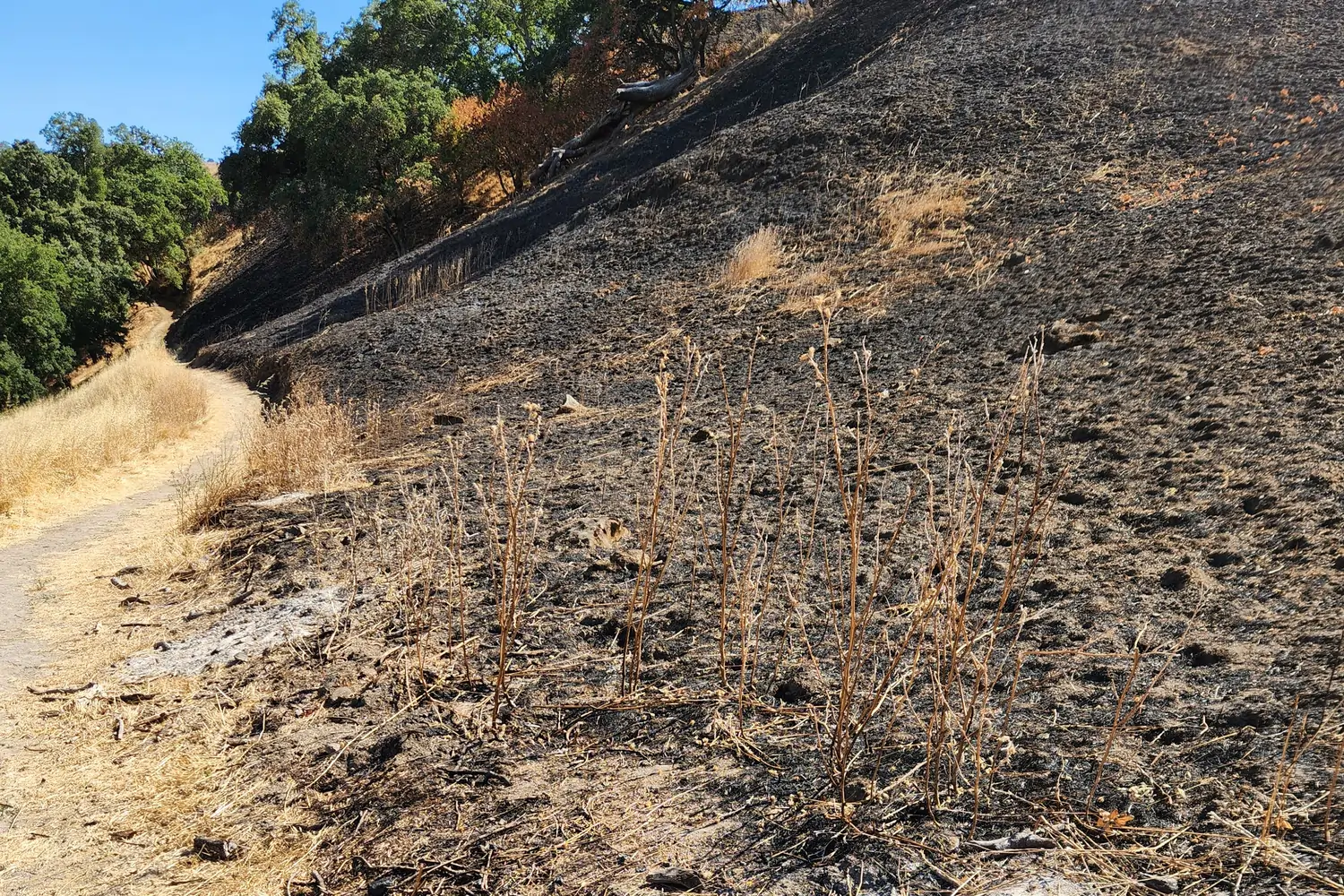
In coordination with fire officials, low intensity prescribed fire is applied to grassy areas like those along the Rossmoor Trail near Saklan Indian Drive. By intentionally consuming fine fuels under controlled conditions, we reduce the risk of high intensity uncontrollable fire during summer.